

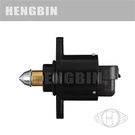
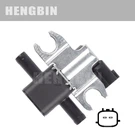

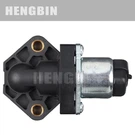

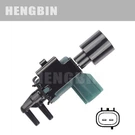
A carbon canister solenoid valve plays a crucial role in a vehicle's evaporative emission control system. It helps manage the flow of fuel vapors from the carbon canister to the engine for combustion, reducing harmful emissions and improving fuel efficiency. However, like any automotive component, it can corrode over time, leading to various performance issues. As a trusted carbon canister solenoid valve supplier, we understand the importance of recognizing the signs of a corroded valve to ensure optimal vehicle performance and compliance with environmental regulations.
1. Check Engine Light Illumination
One of the most common signs of a corroded carbon canister solenoid valve is the illumination of the check engine light on your vehicle's dashboard. Modern vehicles are equipped with an onboard diagnostic (OBD) system that monitors the performance of various components, including the evaporative emission control system. When the OBD system detects a malfunction in the carbon canister solenoid valve, such as a short circuit or a problem with the valve's operation, it will trigger the check engine light. This serves as an early warning sign that there may be an issue with the valve that needs to be addressed.
If the check engine light comes on, it is recommended to use an OBD scanner to retrieve the diagnostic trouble codes (DTCs) stored in the vehicle's computer. These codes can provide valuable information about the specific problem with the carbon canister solenoid valve. For example, a code related to an open or short circuit in the valve circuit may indicate corrosion or damage to the valve's electrical connections.
2. Poor Fuel Economy
A corroded carbon canister solenoid valve can also lead to poor fuel economy. The valve is responsible for regulating the flow of fuel vapors from the carbon canister to the engine. When the valve is corroded, it may not open or close properly, causing an imbalance in the air - fuel mixture. If the valve remains open, excess fuel vapors may enter the engine, leading to a rich air - fuel mixture. This means that more fuel is being burned than necessary, resulting in decreased fuel efficiency.
On the other hand, if the valve is stuck closed, the fuel vapors cannot be properly routed to the engine for combustion. This can cause the engine to run lean, which can also have a negative impact on fuel economy. If you notice a significant decrease in your vehicle's miles per gallon (MPG), it could be a sign of a corroded carbon canister solenoid valve.
3. Difficulty Starting the Vehicle
Another sign of a corroded carbon canister solenoid valve is difficulty starting the vehicle. As mentioned earlier, the valve controls the flow of fuel vapors to the engine. When the valve is corroded and not functioning correctly, it can disrupt the normal starting process. If the valve is stuck open, there may be an excessive amount of fuel vapors in the intake manifold, which can flood the engine and make it difficult to start.
Conversely, if the valve is stuck closed, the engine may not receive enough fuel vapors during the starting process, resulting in a lean air - fuel mixture. This can cause the engine to crank but not start or to start and then stall immediately. If you experience repeated starting problems with your vehicle, it is advisable to have the carbon canister solenoid valve inspected.
4. Strong Fuel Odor
A strong fuel odor inside or around the vehicle can be an indication of a corroded carbon canister solenoid valve. When the valve is corroded, it may not be able to seal properly, allowing fuel vapors to escape into the atmosphere. These vapors have a distinct gasoline smell, which can be detected inside the vehicle cabin or around the fuel tank area.
In addition to being a nuisance, a strong fuel odor can also be a safety hazard. Fuel vapors are highly flammable, and if they accumulate in an enclosed space, they can pose a risk of fire or explosion. If you notice a persistent fuel odor, it is important to have the carbon canister solenoid valve and the entire evaporative emission control system checked as soon as possible.
5. Rough Idling and Engine Misfires
A corroded carbon canister solenoid valve can cause rough idling and engine misfires. When the valve malfunctions, it can disrupt the normal air - fuel mixture in the engine, leading to uneven combustion. This can result in a rough or unstable idle, where the engine may shake or vibrate more than usual.
Engine misfires occur when the air - fuel mixture in one or more cylinders fails to ignite properly. This can cause a loss of power, a decrease in performance, and an increase in exhaust emissions. If you experience rough idling or engine misfires, it is essential to have the carbon canister solenoid valve and other related components inspected to determine the root cause of the problem.


Our Product Offerings
As a leading carbon canister solenoid valve supplier, we offer a wide range of high - quality valves suitable for various vehicle models. For example, our Carbon Tank Solenoid Valve '01997279 Is Suitable for All Models Such As Humwife is designed to meet the strictest industry standards and provide reliable performance. It is engineered to ensure proper control of fuel vapors and compatibility with a diverse range of vehicles.
Another popular product is our Carbon Canister Solenoid Valve 136200 - 7000 Is Suitable for Various Models, Such As Honda. This valve is built with precision and durability in mind, offering excellent resistance to corrosion and wear. It is an ideal replacement part for Honda vehicles, ensuring optimal operation of the evaporative emission control system.
We also offer the Carbon Canister Solenoid Valve'0280142448 Suitable for Various Car Models Such As Vespa Piaggio VESPA. This valve is specifically designed to fit the unique requirements of Vespa Piaggio VESPA and other compatible models, providing efficient vapor management and reducing emissions.
Contact Us for Procurement
If you suspect that your vehicle's carbon canister solenoid valve is corroded or if you are in need of a high - quality replacement valve, we encourage you to contact us for procurement. Our team of experts is ready to assist you in finding the right valve for your vehicle and providing you with the best possible service. We are committed to ensuring that our customers receive reliable products that meet their needs and exceed their expectations.
References
- Automotive Service Excellence (ASE). "Evaporative Emission Control Systems." Study Guide.
- Haynes Manuals. "Automotive Repair Manuals." Various Editions.
- SAE International. "Standards and Technical Papers on Vehicle Emissions."