

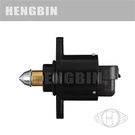
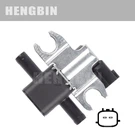

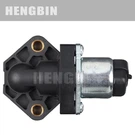

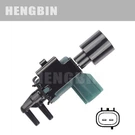
Hey there, fellow car enthusiasts! As a supplier of idle air control valves, I've seen firsthand how these little components can have a big impact on your engine's performance. Today, I want to talk about what happens when an idle air control valve malfunctions and how it can affect your engine temperature.
First off, let's quickly go over what an idle air control valve (IACV) does. The IACV is responsible for regulating the amount of air that bypasses the throttle plate when your engine is idling. This helps maintain a stable idle speed, regardless of whether you're sitting at a stoplight or have accessories like the air conditioning running. It's a crucial part of your engine's control system, and when it starts to act up, things can go downhill fast.


So, what are the signs that your IACV might be malfunctioning? One of the most common symptoms is a rough or unstable idle. You might notice that your engine is shaking more than usual or that the RPMs are fluctuating wildly. Another sign is stalling. If your engine cuts out when you come to a stop or while you're idling, it could be due to a faulty IACV. And then there are the performance issues. You might experience a lack of power, especially when accelerating from a stop, or your engine might hesitate or surge.
Now, let's get to the main topic: how a malfunctioning IACV can affect your engine temperature. When the IACV isn't working properly, it can disrupt the air - fuel mixture in your engine. This is because it's not able to regulate the amount of air flowing into the engine correctly. If too much air is getting in, the mixture becomes lean. A lean mixture burns hotter than a normal one because there's more oxygen available for combustion. This increased heat can cause your engine temperature to rise.
On the other hand, if too little air is getting in, the mixture becomes rich. A rich mixture can also cause problems. The unburned fuel in a rich mixture can collect on the cylinder walls and in the exhaust system. When this fuel eventually burns, it can create additional heat, again leading to an increase in engine temperature.
An overheating engine is a serious issue. It can cause damage to a variety of engine components. The most obvious one is the head gasket. When the engine gets too hot, the head gasket can warp or blow, leading to coolant leaks, loss of compression, and potentially catastrophic engine failure. The pistons and cylinders can also be affected. Excessive heat can cause the pistons to expand beyond their normal tolerances, which can lead to scoring of the cylinder walls and increased friction. This not only reduces engine performance but also generates even more heat, creating a vicious cycle.
Another consequence of an overheating engine due to a malfunctioning IACV is the potential for damage to the catalytic converter. The catalytic converter is designed to reduce harmful emissions by converting pollutants into less harmful substances. However, when the engine is running too hot, the converter can overheat as well. This can cause the catalyst inside to break down, reducing its effectiveness and potentially leading to a check engine light.
Now, I know what you're thinking: "How can I fix this?" Well, the first step is to diagnose the problem. If you're experiencing any of the symptoms I mentioned earlier, it's a good idea to take your car to a mechanic. They can use diagnostic tools to check the IACV and see if it's the root cause of your issues. In some cases, the IACV can be cleaned. Over time, carbon deposits can build up on the valve, preventing it from opening and closing properly. A simple cleaning might do the trick.
But in many cases, the IACV will need to be replaced. And that's where we come in. We're a supplier of high - quality idle air control valves, and we've got a wide range of products to fit different car models. For example, we have the Idle Motor 17111816 Suitable for Various Car Models Such As Oldsmobile. This is a great option if you've got an Oldsmobile or other compatible models. It's built to last and will help get your engine running smoothly again.
We also offer the Idle Motor 23781 - 4M500 Is Suitable for Various Automotive Models Such As NISSAN. If you drive a Nissan, this valve is designed to fit perfectly and restore your engine's performance. And for Renault owners, we have the Idle Motor 7514030 Is Suitable for Various Automotive Models Such As Renault. It's a reliable choice that will help keep your engine temperature in check.
Replacing the IACV is usually a relatively straightforward process, but it's important to make sure you get the right part. That's why it's always a good idea to double - check the compatibility of the valve with your car's make and model. If you're not sure, our customer service team is here to help. We can answer any questions you have and guide you through the selection process.
In addition to replacing the IACV, it's also a good idea to perform some other maintenance tasks. Check your coolant level and make sure it's at the proper level. A low coolant level can also cause your engine to overheat. Inspect your radiator and cooling system for any signs of leaks or blockages. A clogged radiator can prevent proper cooling, which will only exacerbate the problem. And don't forget to check your thermostat. A faulty thermostat can cause your engine to run too hot or too cold.
To sum it up, a malfunctioning idle air control valve can have a significant impact on your engine temperature. By disrupting the air - fuel mixture, it can cause the engine to run too hot, leading to a variety of problems. But the good news is that it's a fixable issue. If you suspect that your IACV is the culprit, don't hesitate to take action. We've got the parts you need to get your engine back in top shape.
If you're interested in purchasing an idle air control valve or have any questions about our products, we'd love to hear from you. Whether you're a professional mechanic or a DIY enthusiast, we're here to help you keep your car running smoothly. Just reach out to us, and we'll be happy to assist you with your purchase and answer any technical questions you might have.
References
- "Automotive Engine Control Systems" by Robert Bosch GmbH
- "Haynes Repair Manuals" for various car models
- Online automotive forums and communities for real - world experiences and troubleshooting tips