

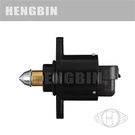
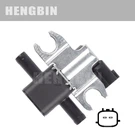

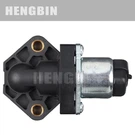

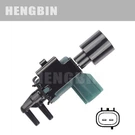
As a seasoned supplier of solenoid valves for Honda motorcycles, I've witnessed firsthand the intricate relationship between the duty cycle of these valves and their overall performance. In this blog, I'll delve into the technical aspects of how the duty cycle impacts the solenoid valve's function on Honda motorcycles, and why it matters for both riders and motorcycle enthusiasts.
Understanding Solenoid Valves in Honda Motorcycles
Solenoid valves play a crucial role in the operation of Honda motorcycles. They are electromechanical devices that control the flow of fluids or gases in various systems, such as the fuel injection system, emissions control system, and more. In the context of Honda motorcycles, solenoid valves are often used to regulate the flow of fuel vapor, air, or other fluids to optimize engine performance and reduce emissions.
The basic principle of a solenoid valve involves an electromagnetic coil that, when energized, creates a magnetic field. This magnetic field then moves a plunger or armature, which either opens or closes the valve, allowing or blocking the flow of the fluid or gas. The duty cycle of a solenoid valve refers to the percentage of time the valve is open during a given period. For example, a duty cycle of 50% means the valve is open for half of the time and closed for the other half.
How Duty Cycle Affects Solenoid Valve Performance
Flow Rate
One of the most significant ways the duty cycle affects solenoid valve performance is through its impact on the flow rate. A higher duty cycle means the valve is open for a longer period, allowing more fluid or gas to pass through. This can be beneficial in situations where a greater flow rate is required, such as during high-speed riding or when the engine needs more fuel to generate power.
Conversely, a lower duty cycle restricts the flow rate, which can be useful for fine-tuning the engine's performance under different operating conditions. For example, during idle or low-speed riding, a lower duty cycle can help reduce fuel consumption and emissions by limiting the amount of fuel vapor entering the engine.
Valve Wear and Tear
The duty cycle also affects the wear and tear of the solenoid valve. A valve that is constantly open or closed for extended periods is more likely to experience mechanical stress and wear. This can lead to issues such as valve sticking, reduced sealing performance, and ultimately, valve failure.
By adjusting the duty cycle, we can minimize the stress on the valve and extend its lifespan. For instance, using a variable duty cycle that changes based on the engine's operating conditions can help distribute the wear more evenly across the valve components.
Response Time
The duty cycle can influence the response time of the solenoid valve. A higher duty cycle generally results in a faster response time, as the valve is more likely to be in an open state and ready to respond to changes in the system. This is particularly important in applications where quick adjustments are needed, such as in the fuel injection system to maintain optimal air-fuel ratios.
On the other hand, a lower duty cycle may slow down the valve's response time, which can be a drawback in certain situations. However, by carefully calibrating the duty cycle, we can strike a balance between response time and other performance factors.
Real-World Implications for Honda Motorcycles
Fuel Efficiency
In Honda motorcycles, the duty cycle of the solenoid valve can have a significant impact on fuel efficiency. By optimizing the duty cycle to match the engine's operating conditions, we can ensure that the right amount of fuel is delivered to the engine at all times. This helps reduce unnecessary fuel consumption and improves the overall fuel efficiency of the motorcycle.
For example, during city riding with frequent stops and starts, a lower duty cycle can be used to limit the fuel vapor flow, resulting in better fuel economy. On the other hand, during highway riding, a higher duty cycle can be employed to provide the engine with the necessary fuel for optimal performance.
Emissions Control
Another important aspect is emissions control. Honda motorcycles are designed to meet strict emissions standards, and the solenoid valve plays a crucial role in achieving this. By controlling the duty cycle, we can regulate the flow of fuel vapor and other emissions-related fluids, ensuring that the motorcycle emits fewer pollutants into the environment.


For instance, a properly calibrated duty cycle can help reduce the amount of unburned fuel and harmful gases released during engine operation. This not only benefits the environment but also helps the motorcycle comply with emissions regulations.
Engine Performance
The duty cycle also affects the overall engine performance of Honda motorcycles. A well-tuned duty cycle can improve throttle response, power output, and smoothness of operation. By providing the engine with the right amount of fuel and air at the right time, the solenoid valve can enhance the engine's efficiency and performance.
For example, a higher duty cycle during acceleration can help the engine generate more power, while a lower duty cycle during deceleration can prevent engine stalling and improve drivability.
Our Product Offerings
As a supplier of solenoid valves for Honda motorcycles, we offer a wide range of high-quality products designed to meet the specific needs of Honda riders. Our solenoid valves are carefully engineered and tested to ensure optimal performance and reliability.
We also provide valves suitable for various car models. For example, we have the Carbon Canister Solenoid Valve 136200-7040 Suitable for Various Car Models Such As Acura, the Carbon Tank Solenoid Valve 28910-3L135 Is Suitable for Various Models Such As Hyundai, and the Carbon Tank Solenoid Valve 12632174 Is Suitable for Various Models Such As Buick. These valves are designed to provide precise control over the flow of fuel vapor and other fluids, helping to improve fuel efficiency and reduce emissions.
Conclusion
In conclusion, the duty cycle of a solenoid valve has a profound impact on its performance in Honda motorcycles. By understanding how the duty cycle affects flow rate, valve wear and tear, response time, and other factors, we can optimize the performance of the solenoid valve and, in turn, enhance the overall performance of the motorcycle.
As a supplier, we are committed to providing our customers with the best solenoid valves for their Honda motorcycles. Whether you're looking to improve fuel efficiency, reduce emissions, or enhance engine performance, our products are designed to meet your needs.
If you're interested in learning more about our solenoid valves or have any questions about the duty cycle and its impact on motorcycle performance, please feel free to contact us. We're here to help you make the right choice for your Honda motorcycle.
References
- "Automotive Engine Control Systems" by John Heywood
- "Fundamentals of Fluid Power Control" by J. A. Blackburn
- "Motorcycle Technology" by David H. Smith