

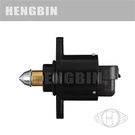


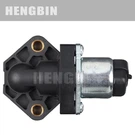

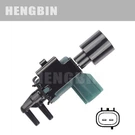
Hey there! I'm a supplier of carbon tank solenoid valves for Ford. Today, I wanna chat about how these nifty valves interact with other components in a Ford vehicle.
First off, let's get a basic understanding of what a carbon tank solenoid valve does. It's a crucial part of the evaporative emission control system (EVAP). Its main job is to control the flow of fuel vapors from the carbon canister to the engine's intake manifold. This helps reduce harmful emissions and also makes the engine run more efficiently.
Interaction with the Carbon Canister
The carbon canister is like a storage unit for fuel vapors. When the vehicle is not running, fuel in the tank evaporates, and these vapors are directed to the carbon canister. The activated carbon inside the canister traps these vapors. Now, this is where our carbon tank solenoid valve comes in. When the engine is running and certain conditions are met, the valve opens. It allows the trapped fuel vapors in the carbon canister to be drawn into the intake manifold. This way, instead of being released into the atmosphere, the vapors are burned in the engine, which is way better for the environment.
For example, if the valve malfunctions and doesn't open when it should, the fuel vapors will stay stuck in the canister. Over time, this can lead to pressure build - up in the canister, and eventually, the system might start to leak fuel vapors into the air. On the other hand, if the valve stays open all the time, it can cause an imbalance in the air - fuel mixture in the engine, leading to poor performance and increased emissions.
Interaction with the Engine Control Module (ECM)
The Engine Control Module is like the brain of the vehicle. It monitors a whole bunch of sensors and decides when to open and close the carbon tank solenoid valve. The ECM takes into account factors such as engine temperature, engine load, and vehicle speed.
Let's say you start your Ford on a cold morning. The ECM knows that the engine needs a rich air - fuel mixture to start easily. So, it might keep the carbon tank solenoid valve closed at first. As the engine warms up and reaches its optimal operating temperature, the ECM will send a signal to the valve to open at the right times. This allows the fuel vapors from the carbon canister to be added to the intake air, improving fuel efficiency and reducing emissions.
If there's a problem with the valve, the ECM can detect it through various sensors. For instance, if the valve is stuck open or closed, it can cause changes in the oxygen sensor readings. The oxygen sensor measures the amount of oxygen in the exhaust gases. An improper air - fuel mixture due to a faulty valve will make the oxygen levels in the exhaust deviate from the normal range. When the ECM detects this, it'll usually trigger a check engine light on the dashboard.
Interaction with the Intake Manifold
The intake manifold is responsible for distributing the air - fuel mixture to the engine's cylinders. When the carbon tank solenoid valve opens, it allows the fuel vapors from the carbon canister to enter the intake manifold. These vapors mix with the incoming air, and the combined mixture is then sent to the cylinders for combustion.
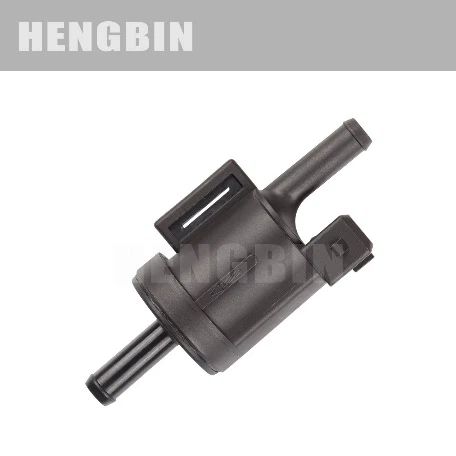
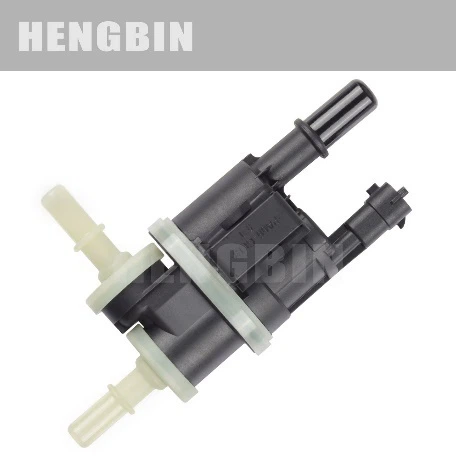
A proper interaction between the valve and the intake manifold is essential for a smooth - running engine. If the valve doesn't open correctly, the engine might not get enough fuel vapors, resulting in a lean air - fuel mixture. This can cause the engine to misfire, have a rough idle, or even stall. On the flip side, if too much fuel vapor is allowed into the intake manifold due to a malfunctioning valve, the engine will run rich. This can lead to increased fuel consumption, black smoke from the exhaust, and potential damage to the catalytic converter over time.
Interaction with the Fuel Tank
The fuel tank is where all the fuel is stored. As fuel evaporates in the tank, the vapors need to go somewhere. That's why they are directed to the carbon canister through a series of hoses. The carbon tank solenoid valve indirectly affects the fuel tank by controlling the flow of these vapors.
If the valve is working properly, it helps maintain the right pressure in the fuel tank. When the valve opens and allows the vapors to be drawn out of the carbon canister, it relieves the pressure in the tank. But if the valve is faulty and doesn't open, the pressure in the fuel tank can build up. This can cause issues like fuel leaks, damage to the fuel tank or its components, and even affect the performance of the fuel pump.
Our Product Range
As a supplier, we offer a wide range of carbon tank solenoid valves for Ford vehicles. But we also have valves suitable for other brands. For example, we have the Carbon Tank Solenoid Valve 0490B00701 Is Suitable for Various Models, Such As BYD, the Carbon Tank Solenoid Valve 46346843 Suitable for Various Models Such As Chrysler, and the Carbon Tank Solenoid Valve F 01R 00Q 017 Suitable for Various Models Such As Dongfeng.
Our valves are designed to meet the highest quality standards. They are made from durable materials and are rigorously tested to ensure they work perfectly with the corresponding vehicle components. Whether you're a Ford owner looking to replace a faulty valve or a mechanic in need of reliable parts, we've got you covered.
Why Choose Us?
We understand the importance of a well - functioning carbon tank solenoid valve in a vehicle. That's why we put a lot of effort into providing top - notch products. Our valves are cost - effective, and we offer excellent customer service. If you have any questions about our products or need help with installation, our team is always ready to assist you.
If you're interested in purchasing our carbon tank solenoid valves, we'd love to have a chat with you. Just reach out to us, and we can start a discussion about your specific needs. Whether you need a single valve for a personal vehicle or a bulk order for a repair shop, we're here to make the process as smooth as possible.
References
- "Automotive Engine Performance" by James D. Halderman
- "Modern Automotive Technology" by James E. Duffy