

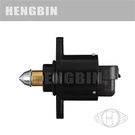
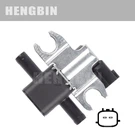

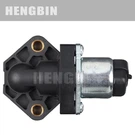

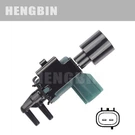
In the automotive industry, carbon canister shut-off valves play a crucial role in the evaporative emission control system. These valves are designed to manage the flow of fuel vapors from the carbon canister to the engine intake manifold, helping to reduce harmful emissions and improve fuel efficiency. However, their performance can be significantly affected by environmental conditions, especially humidity. As a leading supplier of carbon canister shut-off valves, I am often asked about how these valves work in humid environments. In this blog post, I will delve into the workings of carbon canister shut-off valves and explore their behavior in humid conditions.
Understanding the Basics of Carbon Canister Shut-Off Valves
Before we discuss the impact of humidity, let's first understand how carbon canister shut-off valves operate under normal conditions. The carbon canister is a key component of the evaporative emission control system, which captures and stores fuel vapors that would otherwise escape into the atmosphere. When the engine is running, the carbon canister shut-off valve opens to allow the stored fuel vapors to be drawn into the engine intake manifold, where they are burned along with the air-fuel mixture.
The operation of the carbon canister shut-off valve is typically controlled by the engine control unit (ECU). The ECU monitors various engine parameters, such as engine speed, temperature, and load, to determine when to open and close the valve. When the engine is cold or idling, the valve may remain closed to prevent excessive fuel vapors from entering the engine, which could cause rough idling or stalling. As the engine warms up and reaches normal operating conditions, the valve opens to allow the fuel vapors to be purged from the carbon canister.
The Impact of Humidity on Carbon Canister Shut-Off Valves
Humidity can have several effects on the performance of carbon canister shut-off valves. One of the primary concerns is the potential for moisture to accumulate inside the valve and its associated components. When water vapor condenses on the valve surfaces, it can cause corrosion and damage to the internal parts, leading to reduced valve performance or even complete failure.
Moisture can also affect the electrical components of the valve, such as the solenoid. The solenoid is responsible for opening and closing the valve in response to signals from the ECU. If moisture seeps into the solenoid, it can cause short circuits or other electrical problems, which can prevent the valve from operating correctly.
In addition to corrosion and electrical issues, humidity can also impact the sealing properties of the valve. The valve must form a tight seal to prevent fuel vapors from leaking out when it is closed. However, moisture can cause the sealing materials to swell or degrade over time, reducing the effectiveness of the seal and allowing fuel vapors to escape.
How Carbon Canister Shut-Off Valves Are Designed to Withstand Humidity
To address the challenges posed by humidity, carbon canister shut-off valves are designed with several features to protect against moisture damage. One common approach is to use corrosion-resistant materials in the construction of the valve. For example, the valve body may be made of stainless steel or other materials that are less susceptible to rust and corrosion.
Another important design feature is the use of seals and gaskets that are resistant to moisture. These seals are typically made of rubber or other elastomeric materials that can maintain their flexibility and sealing properties even in humid environments. Additionally, the valve may be designed with drainage channels or vents to allow any accumulated moisture to escape.
Some carbon canister shut-off valves also incorporate moisture sensors or other diagnostic features to detect the presence of moisture inside the valve. If moisture is detected, the ECU can take appropriate action, such as adjusting the valve operation or alerting the driver to a potential problem.
Our Range of Carbon Canister Shut-Off Valves
As a supplier of carbon canister shut-off valves, we offer a wide range of products suitable for various car models. Our valves are designed to meet the highest quality standards and are built to withstand the rigors of different environmental conditions, including humidity.
For example, we have the Carbon Canister Shut-off Valve CPV126 and 13575701 and Other Models Suitable for Various Car Models Such As Changan. These valves are engineered to provide reliable performance and efficient vapor management, even in humid climates.
We also offer the Carbon Canister Shut-off Valve 1130010 - BN02 and 0522A - 2 - 0432 Suitable for Various Car Models Such As Yidong. These valves are designed with advanced sealing technology to prevent moisture ingress and ensure a tight seal, reducing the risk of fuel vapor leaks.
In addition, our Carbon Canister Shut-off Valve CK1101024L3 and 1130010 - BN01 Suitable for Various Vehicle Models Such As Dongfeng are built with high-quality materials and precision engineering to deliver optimal performance in humid environments.
Ensuring Optimal Performance in Humid Environments
While our carbon canister shut-off valves are designed to withstand humidity, there are still some steps that can be taken to ensure their optimal performance in such conditions. Regular maintenance is essential, including inspecting the valve for signs of corrosion or damage and cleaning it as needed. It is also important to check the electrical connections and ensure that they are dry and secure.


In addition, it is recommended to use high-quality fuel and keep the fuel tank properly sealed to minimize the amount of moisture that can enter the evaporative emission control system. If the vehicle is exposed to extremely humid conditions for an extended period, it may be beneficial to have the valve and its associated components inspected by a professional mechanic.
Conclusion and Invitation to Contact
In conclusion, carbon canister shut-off valves play a vital role in the automotive evaporative emission control system, and their performance can be affected by humidity. However, with proper design, materials, and maintenance, these valves can provide reliable operation even in challenging environmental conditions.
As a trusted supplier of carbon canister shut-off valves, we are committed to providing high-quality products that meet the needs of our customers. If you are interested in learning more about our carbon canister shut-off valves or would like to discuss your specific requirements, please feel free to contact us. We look forward to the opportunity to work with you and provide you with the best solutions for your automotive needs.
References
- Automotive Emission Control Systems: Principles and Practice, by John Heywood
- Handbook of Automotive Engineering, edited by Graham Crolla and David Crolla
- Society of Automotive Engineers (SAE) standards related to evaporative emission control systems