


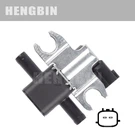

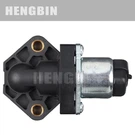

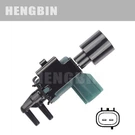
In the intricate ecosystem of an automobile engine, every component plays a crucial role in ensuring optimal performance, efficiency, and environmental compliance. Among these components, the carbon canister shut - off valve stands out as a small yet significant part that can have a profound impact on engine performance. As a leading supplier of carbon canister shut - off valves, I have witnessed firsthand how these valves influence various aspects of an engine's operation.
Understanding the Carbon Canister Shut - off Valve
Before delving into its impact on engine performance, it's essential to understand what a carbon canister shut - off valve is and how it functions. The carbon canister is a key part of the vehicle's evaporative emissions control system. Its primary function is to capture and store fuel vapors that would otherwise escape into the atmosphere. The carbon canister shut - off valve acts as a gatekeeper, controlling the flow of these fuel vapors between the carbon canister and the engine's intake manifold.
Under normal operating conditions, the valve remains closed, preventing the fuel vapors from entering the engine until the right moment. When the engine reaches a certain temperature and operating conditions are met, the valve opens, allowing the stored fuel vapors to be drawn into the intake manifold and burned in the combustion chamber. This process not only reduces harmful emissions but also makes use of the fuel vapors that would otherwise be wasted.
Impact on Engine Performance
1. Fuel Efficiency
One of the most significant ways a carbon canister shut - off valve affects engine performance is through its impact on fuel efficiency. When the valve operates correctly, it ensures that the fuel vapors stored in the carbon canister are properly introduced into the combustion process. These vapors act as an additional source of fuel, supplementing the regular fuel supply. As a result, the engine can make more efficient use of the available fuel, leading to improved miles per gallon (MPG).
For example, in a well - functioning system, the valve opens at the appropriate time, allowing the fuel vapors to mix evenly with the incoming air - fuel mixture. This results in a more complete combustion process, where less fuel is wasted and more energy is extracted from each drop of fuel. On the other hand, a faulty valve that either fails to open or opens at the wrong time can disrupt this process. If the valve remains closed, the fuel vapors are not utilized, and the engine has to rely solely on the regular fuel supply. Conversely, if the valve opens too early or too often, it can cause an imbalance in the air - fuel ratio, leading to inefficient combustion and decreased fuel efficiency.
2. Emissions Control
The carbon canister shut - off valve is a critical component in the vehicle's emissions control system. By controlling the flow of fuel vapors, it helps to reduce the amount of hydrocarbons (HC) and other harmful pollutants released into the atmosphere. When the valve functions properly, it ensures that the fuel vapors are burned in the engine rather than being released into the environment.
In modern vehicles, strict emissions standards have been implemented to protect the environment. A malfunctioning carbon canister shut - off valve can cause the vehicle to fail emissions tests. For instance, if the valve leaks or fails to close properly, fuel vapors can escape directly into the atmosphere, increasing the vehicle's HC emissions. This not only contributes to air pollution but can also result in the vehicle being deemed non - compliant with local emissions regulations.


3. Engine Power and Performance
The proper operation of the carbon canister shut - off valve can also have an impact on engine power and performance. A well - regulated flow of fuel vapors into the intake manifold can enhance the engine's power output. When the valve opens at the right time, the additional fuel vapors can increase the energy released during combustion, resulting in more power being generated.
Conversely, a faulty valve can lead to a decrease in engine power. If the valve fails to open, the engine is deprived of the additional fuel source provided by the fuel vapors. This can cause a noticeable reduction in acceleration and overall performance. In some cases, a malfunctioning valve can also cause rough idling, misfires, and hesitation during acceleration.
Our Product Offerings
As a supplier of carbon canister shut - off valves, we offer a wide range of products suitable for various vehicle models. Our valves are designed and manufactured to the highest quality standards, ensuring reliable performance and long - lasting durability.
For example, our Carbon Canister Shut - off Valve CK1101024L3 and 1130010 - BN01 is suitable for various vehicle models such as Dongfeng. These valves are engineered to provide precise control over the flow of fuel vapors, ensuring optimal engine performance and emissions control.
We also offer the Carbon Canister Shut - off Valve 1130010 - BN02 and 0522A - 2 - 0432, which is suitable for car models such as Yidong. These valves are designed to meet the specific requirements of different engines, providing a perfect fit and reliable operation.
In addition, our Carbon Canister Shut - off Valve CPV126 and 13575701 and Other Models are suitable for various car models such as Changan. Our products are rigorously tested to ensure that they meet or exceed industry standards, providing our customers with peace of mind and confidence in their purchase.
Importance of Regular Maintenance
To ensure that the carbon canister shut - off valve continues to perform optimally, regular maintenance is essential. Over time, the valve can become clogged with debris, carbon deposits, or other contaminants. This can prevent it from opening or closing properly, leading to the issues mentioned above.
Vehicle owners should follow the manufacturer's recommended maintenance schedule, which typically includes inspecting the carbon canister shut - off valve at regular intervals. If any signs of wear, damage, or malfunction are detected, the valve should be replaced promptly. Regular maintenance not only helps to maintain engine performance but also extends the lifespan of the valve and other components in the evaporative emissions control system.
Contact Us for Procurement
If you are in the market for high - quality carbon canister shut - off valves, look no further. As a trusted supplier, we are committed to providing our customers with the best products and services. Our team of experts is always available to answer your questions and help you find the right valve for your vehicle. Whether you are an automotive manufacturer, a repair shop, or an individual vehicle owner, we can meet your needs. Contact us today to start a procurement discussion and experience the difference our products can make in your engine's performance.
References
- Heywood, J. B. (1988). Internal Combustion Engine Fundamentals. McGraw - Hill.
- Bosch Automotive Handbook (7th Edition). Robert Bosch GmbH.
- Society of Automotive Engineers (SAE) standards related to evaporative emissions control systems.