

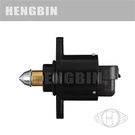
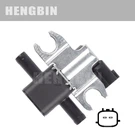

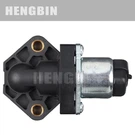

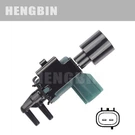
Hey there! As a supplier of idle motors suitable for Audi, I'm super stoked to share with you the working principle of these nifty little devices. So, let's dive right in!
First off, what the heck is an idle motor? Well, in simple terms, it's a crucial component in your Audi's engine management system. Its main job is to control the engine's idle speed. You know that smooth purr your car makes when it's just sitting still at a stoplight? That's thanks in large part to the idle motor doing its thing.
Now, let's get into the nitty - gritty of how it works. The idle motor is typically an electric device. It's connected to the engine's intake manifold. When the engine is running, the throttle plate controls the amount of air that enters the engine. But at idle, the throttle plate is almost closed. That's where the idle motor steps in.
The engine control unit (ECU) in your Audi is constantly monitoring a bunch of different parameters. It keeps an eye on things like engine temperature, coolant temperature, and the electrical load on the system. Based on all this data, the ECU decides what the ideal idle speed should be.


Once the ECU figures out the right idle speed, it sends a signal to the idle motor. The idle motor then adjusts the amount of air that bypasses the closed throttle plate. It has a valve or a plunger mechanism. When the ECU tells it to increase the idle speed, the idle motor opens up the bypass passage a bit more, allowing more air to enter the engine. More air means more fuel can be burned, which in turn increases the engine's RPM (revolutions per minute).
Conversely, if the ECU determines that the idle speed is too high, it sends a signal to the idle motor to close the bypass passage slightly. This reduces the amount of air entering the engine, and the idle speed drops back down to the desired level.
Let's talk about some of the different types of idle motors you might find in an Audi. There are stepper motors and DC motors. Stepper motors are pretty common. They work by moving in small, precise steps. The ECU sends a series of electrical pulses to the stepper motor, and each pulse makes the motor move a little bit. This allows for very accurate control of the idle speed.
DC motors, on the other hand, are simpler. They work based on the principle of electromagnetism. When an electric current is applied to the motor, it creates a magnetic field that makes the motor spin. The ECU can control the speed of the DC motor by varying the amount of current it sends.
Now, why is all this so important? Well, a properly functioning idle motor is essential for a smooth - running engine. If the idle motor isn't working right, you might notice a bunch of problems. Your engine could idle too high or too low. It might even stall when you come to a stop. And over time, these issues can lead to more serious engine problems.
As a supplier, I've seen firsthand the importance of high - quality idle motors. That's why we make sure to source only the best components for our idle motors suitable for Audi. We test them rigorously to ensure they meet the highest standards.
If you're in the market for other types of idle motors, we've got you covered too. Check out these great options: Idle Motor 21007019 Is Suitable for Various Automotive Models Such As BMW, Generic IDLE AIR CONTROL VALVE 90120 Is Suitable for All Kinds Of Automotive Models, and Idle Motor 7514038 Is Suitable for Various Automotive Models Such As Renault.
Whether you're a mechanic looking for reliable parts or a car owner who wants to keep their Audi running smoothly, we're here to help. If you're interested in our idle motors suitable for Audi or any of our other products, don't hesitate to reach out for a purchase negotiation. We're always happy to chat and find the best solutions for your needs.
References:
- Automotive Engine Control Systems textbooks
- Audi technical manuals