



Hey there! As a supplier of EGR vacuum solenoid valves, I often get asked about the function of the coil in these valves. So, I thought I'd write this blog to break it down for you in a simple and easy - to - understand way.
Let's start with the basics. An EGR (Exhaust Gas Recirculation) vacuum solenoid valve is a crucial component in a vehicle's emission control system. Its main job is to regulate the flow of exhaust gases back into the engine's intake manifold. By doing this, it helps reduce the formation of harmful nitrogen oxides (NOx) during the combustion process, which is great for the environment and also helps the vehicle meet emission standards.
Now, let's talk about the coil. The coil in an EGR vacuum solenoid valve is like the heart of the operation. It's an electromagnetic coil, which means it can create a magnetic field when an electric current passes through it.


How the Coil Works
When the engine control unit (ECU) sends an electrical signal to the coil, the coil becomes energized. This energized coil then creates a magnetic field. The magnetic field acts on a plunger or a valve inside the solenoid. The plunger is usually attached to a diaphragm or a valve seat.
When the coil is energized, the magnetic force pulls the plunger, which in turn opens or closes the valve. If the valve opens, it allows the vacuum to be applied to the EGR valve. The vacuum then actuates the EGR valve, causing it to open and let a certain amount of exhaust gas into the intake manifold.
On the other hand, when the electrical signal stops, the coil de - energizes, and the magnetic field disappears. The plunger returns to its original position due to a spring force. This closes the valve, cutting off the vacuum supply to the EGR valve. As a result, the EGR valve closes, and the flow of exhaust gas stops.
Precision Control
One of the key functions of the coil is to provide precise control over the EGR system. The ECU can vary the strength of the electrical signal sent to the coil. By adjusting the current flowing through the coil, the strength of the magnetic field can be changed. This allows for fine - tuning of the amount of vacuum applied to the EGR valve.
For example, during low - load conditions, the engine doesn't need as much exhaust gas recirculation. So, the ECU can send a weak electrical signal to the coil. This creates a relatively weak magnetic field, which only opens the valve slightly, allowing a small amount of exhaust gas to enter the intake manifold.
Conversely, during high - load conditions, the engine may require more exhaust gas recirculation to reduce NOx emissions. In this case, the ECU sends a stronger electrical signal to the coil. The stronger magnetic field pulls the plunger further, opening the valve wider and letting more exhaust gas into the intake.
Reliability and Durability
The coil also plays a role in the reliability and durability of the EGR vacuum solenoid valve. A well - designed coil can withstand repeated cycles of energizing and de - energizing. It's made of high - quality wire that can handle the electrical current without overheating or breaking.
However, like any component, the coil can fail over time. Factors such as excessive heat, vibration, and electrical shorts can damage the coil. If the coil fails, the solenoid valve won't work properly. The EGR valve may stay open or closed all the time, which can lead to poor engine performance, increased emissions, and even engine damage.
Our EGR Vacuum Solenoid Valves
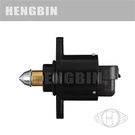
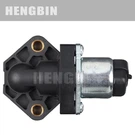
As a supplier, we offer a wide range of EGR vacuum solenoid valves with high - quality coils. For instance, our EGR Vacuum Solenoid Valve 9048411 Is Suitable for Various Automotive Models Such As Xuef is designed to provide reliable and precise control for specific vehicle models. It has a well - crafted coil that ensures long - term performance.
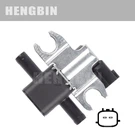
Another great product is our EGR Vacuum Solenoid Valve K5T48478 Suitable for Various Automotive Models Such As Subaru. This solenoid valve is engineered to meet the high - standards of Subaru vehicles. The coil in this valve is optimized to work in harmony with the Subaru engine's ECU, providing accurate exhaust gas recirculation control.
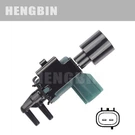
We also have the EGR Vacuum Solenoid Valve 90910 - 12080 Suitable for Various Automotive Models Such As Toyota. It's a perfect fit for Toyota engines, with a coil that can handle the specific electrical signals sent by Toyota's engine control systems.
Importance of Quality Coils
Using a solenoid valve with a high - quality coil is essential for vehicle owners and mechanics. A good coil ensures that the EGR system works correctly, which means better engine performance, lower emissions, and fewer problems down the road.
If you're experiencing issues with your vehicle's EGR system, such as rough idling, poor fuel economy, or a check engine light related to the EGR system, it could be a problem with the coil in the EGR vacuum solenoid valve. In such cases, replacing the solenoid valve with a high - quality one from a reliable supplier like us can solve the problem.
Conclusion
In conclusion, the coil in an EGR vacuum solenoid valve is a vital component that enables the precise control of exhaust gas recirculation. It creates the magnetic field needed to open and close the valve, and it allows for fine - tuning of the EGR system based on the engine's operating conditions.
If you're in the market for EGR vacuum solenoid valves, we've got you covered. Our products are designed with high - quality coils to ensure reliable and efficient performance. Whether you're a mechanic looking for parts for your customers' vehicles or a vehicle owner wanting to replace a faulty solenoid valve, we can provide the right solution.
If you're interested in purchasing our EGR vacuum solenoid valves or have any questions about them, feel free to reach out. We're always happy to help with your procurement needs and have in - depth discussions about how our products can benefit your vehicles.
References
- Automotive Emission Control Systems: Principles and Practice by John Heywood
- Modern Engine Technology: Fundamentals by Richard Stone