

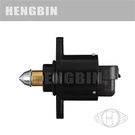
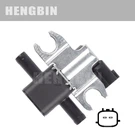

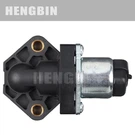

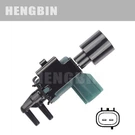
As a trusted supplier of EGR vacuum solenoid valves for Subaru, I've witnessed firsthand the critical role these components play in a vehicle's performance. The EGR (Exhaust Gas Recirculation) vacuum solenoid valve is a key part of the emission control system in Subaru vehicles. It regulates the flow of exhaust gases back into the engine's intake manifold, which helps reduce nitrogen oxide emissions and improve fuel efficiency. However, when this valve malfunctions, it can lead to a host of potential risks that every Subaru owner should be aware of.
1. Reduced Fuel Efficiency
One of the primary functions of the EGR vacuum solenoid valve is to recirculate a controlled amount of exhaust gas into the combustion chamber. This recirculation process lowers the combustion temperature, which in turn reduces the formation of nitrogen oxides. When the valve is faulty, it may either allow too much or too little exhaust gas to enter the intake manifold.
If too much exhaust gas is recirculated, the air - fuel mixture becomes too lean. A lean mixture means there is more air and less fuel in the combustion chamber. This can cause the engine to misfire, and the vehicle will have to burn more fuel to maintain the same level of power. On the other hand, if too little exhaust gas is recirculated, the combustion temperature rises, leading to increased engine knocking. To compensate for the knocking, the engine control unit may adjust the fuel injection timing and increase the fuel supply, also resulting in reduced fuel efficiency.
Subaru owners may notice a significant drop in their vehicle's miles - per - gallon (MPG) rating. This not only means more frequent trips to the gas station but also increased long - term fuel costs. For example, a Subaru Forester that normally gets 30 MPG on the highway may see its fuel economy drop to 25 MPG or even lower when the EGR vacuum solenoid valve is faulty.
2. Engine Performance Issues
A faulty EGR vacuum solenoid valve can have a detrimental impact on the engine's performance. As mentioned earlier, an improper amount of exhaust gas in the intake manifold can cause engine misfires. Misfires occur when the air - fuel mixture in one or more cylinders fails to ignite properly. This can lead to a rough idle, where the engine shakes or vibrates when the vehicle is stationary.
In addition to rough idle, misfires can also cause a loss of power during acceleration. When driving, the vehicle may feel sluggish and unresponsive, making it difficult to merge onto highways or pass other vehicles safely. The engine may also experience hesitation or stuttering when the accelerator pedal is pressed.
Over time, repeated misfires can cause damage to other engine components. The unburned fuel can enter the exhaust system and damage the catalytic converter. The catalytic converter is an important part of the emission control system that reduces harmful emissions. If it is damaged, it can lead to even more serious problems and expensive repairs.
3. Increased Emissions
The EGR system is designed to reduce nitrogen oxide (NOx) emissions. Nitrogen oxides are harmful pollutants that contribute to smog and acid rain. When the EGR vacuum solenoid valve is not working correctly, the recirculation of exhaust gas is disrupted, and the vehicle may emit higher levels of NOx.
In many regions, vehicles are required to pass emissions tests to be legally driven on the road. A Subaru with a faulty EGR vacuum solenoid valve is likely to fail these tests. This can result in the vehicle being unable to be registered or having its registration revoked until the issue is fixed.
Moreover, increased emissions have a negative impact on the environment. By releasing more NOx into the atmosphere, the vehicle contributes to air pollution, which can have harmful effects on human health, including respiratory problems and increased risk of heart disease.
4. Check Engine Light Activation
Modern vehicles are equipped with an onboard diagnostic system (OBD). The OBD system monitors the performance of various engine components, including the EGR vacuum solenoid valve. When the valve malfunctions, the OBD system detects the problem and triggers the check engine light on the dashboard.
The check engine light is a warning sign that something is wrong with the vehicle. Ignoring this warning can lead to more serious problems down the road. When the check engine light comes on, it is important to have the vehicle diagnosed by a professional mechanic as soon as possible.
However, it's important to note that the check engine light can be triggered by many different issues, not just a faulty EGR vacuum solenoid valve. A professional mechanic will use diagnostic tools to determine the exact cause of the problem.


5. Damage to Other Components
As previously mentioned, a faulty EGR vacuum solenoid valve can cause damage to the catalytic converter. In addition to the catalytic converter, other engine components may also be affected. For example, the intake manifold can become clogged with carbon deposits if the valve is not functioning properly. The recirculation of exhaust gas normally helps to clean the intake manifold, but when the valve is faulty, the exhaust gas may not flow correctly, leading to the buildup of carbon.
Carbon deposits can restrict the flow of air into the engine, further reducing engine performance. They can also cause problems with the throttle body and the mass air flow sensor. These components are responsible for measuring and controlling the amount of air entering the engine. If they are contaminated with carbon, they may not function correctly, leading to inaccurate air - fuel mixture ratios.
Our Solutions
As a supplier of EGR vacuum solenoid valves for Subaru, we offer high - quality replacement parts that are designed to meet or exceed OEM specifications. Our valves are rigorously tested to ensure reliable performance and durability.
We also have a wide range of EGR vacuum solenoid valves suitable for other automotive models. For example, the EGR Vacuum Solenoid Valve K5T48486 Is Suitable for Various Automotive Models Such As ford, the EGR Vacuum Solenoid Valve 2283686 Suitable for Various Automotive Models Such As Honda, and the EGR Vacuum Solenoid Valve K5T48481 Is Suitable for Various Automotive Models, Such As Nissan.
If you are experiencing any of the problems mentioned above with your Subaru or other vehicle, it may be time to replace the EGR vacuum solenoid valve. Our team of experts is ready to assist you in finding the right part for your vehicle. We can provide detailed technical support and guidance to ensure a proper installation.
If you are interested in purchasing our EGR vacuum solenoid valves or have any questions about our products, please feel free to contact us for further details and to start a procurement discussion. We are committed to providing the best products and services to our customers.
References
- "Automotive Emission Control Systems" by John Heywood
- "Modern Engine Technology: Gasoline Engines" by Richard A. Finch