

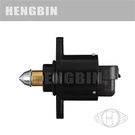
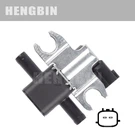

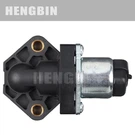

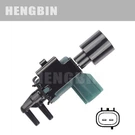
As a leading supplier of carbon canister shut-off valves, I often encounter inquiries about the flow rates of these crucial components. Understanding the flow rates of carbon canister shut-off valves is essential for ensuring optimal performance and compliance with environmental regulations in various automotive applications. In this blog post, I will delve into the concept of flow rates, factors influencing them, and how our products meet the diverse needs of the automotive industry.
What is Flow Rate?
Flow rate refers to the volume of fluid or gas that passes through a valve per unit of time. In the context of carbon canister shut-off valves, the flow rate is typically measured in liters per minute (L/min) or cubic feet per minute (CFM). This metric is critical as it determines how effectively the valve can control the flow of fuel vapors from the carbon canister to the engine's intake manifold.
The flow rate of a carbon canister shut-off valve is a key parameter that affects the overall efficiency of the evaporative emissions control system. A valve with an appropriate flow rate ensures that the correct amount of fuel vapors is purged from the canister and burned in the engine, reducing harmful emissions and improving fuel economy.
Factors Influencing the Flow Rate
Several factors can influence the flow rate of a carbon canister shut-off valve. Understanding these factors is crucial for selecting the right valve for a specific application.
Valve Design
The design of the valve plays a significant role in determining its flow rate. Factors such as the size and shape of the valve opening, the type of valve mechanism (e.g., solenoid - operated or diaphragm - operated), and the internal flow path can all affect how easily fuel vapors can pass through the valve. For example, a valve with a larger opening and a smooth internal flow path will generally have a higher flow rate than one with a smaller opening and a more tortuous path.
Pressure Differential
The pressure differential across the valve is another important factor. The flow rate of a fluid or gas through a valve is directly proportional to the pressure difference between the inlet and the outlet. In the case of carbon canister shut - off valves, the pressure differential is created by the difference in pressure between the carbon canister and the engine's intake manifold. A higher pressure differential will result in a higher flow rate, assuming the valve is properly sized and designed to handle the pressure.
Temperature
Temperature can also impact the flow rate of a carbon canister shut - off valve. As the temperature of the fuel vapors changes, so does their density. Higher temperatures generally result in lower vapor density, which can increase the flow rate through the valve. However, extreme temperatures can also affect the materials and performance of the valve, so it is important to select a valve that is designed to operate within a specific temperature range.
Viscosity of the Fluid
Although fuel vapors are relatively low - viscosity fluids, any changes in their viscosity can still affect the flow rate. Contaminants or changes in the fuel composition can alter the viscosity of the vapors, potentially leading to changes in the flow rate through the valve.
Our Carbon Canister Shut - off Valve Products
At our company, we offer a wide range of carbon canister shut - off valves with different flow rates to meet the needs of various car models. Our products are designed and manufactured to the highest quality standards, ensuring reliable performance and long - term durability.
We have valve models such as the Carbon Canister Shut - off Valve CPV126 and 13575701 and Other Models Suitable for Various Car Models Such As Changan, Carbon Canister Shut - off Valve 1130010 - BN02 and 0522A - 2 - 0432 Suitable for Various Car Models Such As Yidong, and Carbon Canister Shut - off Valve CK1101024L3 and 1130010 - BN01 Suitable for Various Vehicle Models Such As Dongfeng. These valves are engineered to provide precise flow rate control, ensuring optimal performance in different automotive applications.
Our valves are carefully tested to ensure that they meet or exceed industry standards for flow rate and other critical performance parameters. We use advanced manufacturing techniques and high - quality materials to ensure that our valves are resistant to wear, corrosion, and other environmental factors that can affect their performance over time.
Importance of Selecting the Right Flow Rate
Selecting the right flow rate for a carbon canister shut - off valve is crucial for several reasons. First and foremost, it ensures compliance with environmental regulations. Automotive manufacturers are required to meet strict emissions standards, and a properly sized valve with the correct flow rate is essential for controlling the release of fuel vapors into the atmosphere.
Secondly, the right flow rate can improve fuel economy. By ensuring that the correct amount of fuel vapors is purged from the canister and burned in the engine, the engine can operate more efficiently, reducing fuel consumption.


Finally, selecting the appropriate flow rate can enhance the overall performance and reliability of the vehicle. A valve with an incorrect flow rate can cause issues such as rough idling, stalling, or reduced engine power.
How to Determine the Appropriate Flow Rate
Determining the appropriate flow rate for a carbon canister shut - off valve requires careful consideration of several factors. These include the size and type of the engine, the capacity of the carbon canister, and the specific requirements of the vehicle's evaporative emissions control system.
Automotive manufacturers typically specify the required flow rate for the carbon canister shut - off valve in their technical documentation. When selecting a valve, it is important to refer to these specifications to ensure that the valve meets the requirements of the vehicle.
In addition, our team of experts is available to provide technical support and guidance on selecting the right valve for your specific application. We can help you evaluate the various factors involved and recommend the valve with the most suitable flow rate for your needs.
Contact Us for Procurement and Consultation
If you are in the market for high - quality carbon canister shut - off valves, look no further. Our comprehensive range of products, with different flow rates suitable for various car models, ensures that you can find the perfect solution for your automotive needs.
Whether you are an automotive manufacturer, a repair shop, or a distributor, we are here to provide you with the best products and services. We understand the importance of reliable emissions control systems and are committed to helping you meet your goals while ensuring compliance with environmental regulations.
Contact us today to discuss your specific requirements and to start a procurement process. Our team of professionals will be happy to answer any questions you may have and to assist you in selecting the right carbon canister shut - off valves for your applications.
References
- Smith, J. (2020). Automotive Evaporative Emissions Control Systems. SAE International.
- Jones, A. (2021). Valve Technology and Applications in the Automotive Industry. Elsevier.
- Brown, R. (2022). Understanding Flow Rates in Fluid Control Valves. Chemical Engineering Journal.