

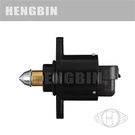
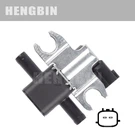

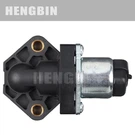

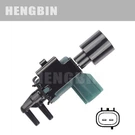
Hey there! As a supplier of carbon canister solenoid valves for BYD, I've seen my fair share of issues with these parts. Today, I'm gonna walk you through how to troubleshoot the carbon canister solenoid valve for BYD vehicles. Let's get started!
First off, let's talk about what a carbon canister solenoid valve does. It's an important part of the evaporative emission control system in your car. Its main job is to control the flow of fuel vapor from the carbon canister to the engine intake manifold. This helps reduce harmful emissions and improve fuel efficiency.
Common Symptoms of a Faulty Carbon Canister Solenoid Valve
Before we dive into troubleshooting, it's important to know the signs that your carbon canister solenoid valve might be acting up. Here are some common symptoms:
- Check Engine Light: One of the most obvious signs is when the check engine light comes on. Your car's onboard diagnostic system can detect problems with the solenoid valve and trigger the warning light.
- Poor Fuel Economy: If the valve isn't working properly, it can disrupt the normal flow of fuel vapor. This might lead to your engine burning more fuel than it should, causing a drop in fuel efficiency.
- Rough Idling: A faulty solenoid valve can cause your engine to idle roughly. You might notice vibrations or a fluctuating RPM when your car is at a stop.
- Strong Fuel Odor: If there's a leak in the valve or the system, you might smell fuel around your car. This is a serious issue as fuel vapors are flammable and can be harmful to your health.
Troubleshooting Steps
Now that you know the symptoms, let's get into the actual troubleshooting process.
Step 1: Visual Inspection
The first thing you should do is give the carbon canister solenoid valve a visual once - over. Look for any obvious signs of damage, like cracks, leaks, or loose connections. Check the electrical connectors to make sure they're firmly attached and there's no corrosion. Sometimes, a simple loose connection can cause problems.
Step 2: Check the Electrical Circuit
The solenoid valve is an electrical component, so it's important to check the electrical circuit. You'll need a multimeter for this. First, disconnect the electrical connector from the valve. Set your multimeter to the resistance (ohms) setting. Then, measure the resistance across the terminals of the solenoid valve. The resistance value should be within the specifications provided by BYD. If the reading is way off or shows infinite resistance, it's likely that the valve is faulty.
Step 3: Listen for Operation
You can also listen to the solenoid valve to see if it's operating correctly. With the engine running, you should be able to hear a clicking sound when the valve opens and closes. If you don't hear the clicking, it could mean that the valve isn't getting the proper electrical signal or that it's stuck.
Step 4: Pressure Test
A pressure test can help you determine if the valve is allowing the proper flow of fuel vapor. You'll need a pressure gauge for this test. Connect the pressure gauge to the fuel vapor line near the solenoid valve. Then, start the engine and let it idle. The pressure should build up to a certain level and then stabilize. If the pressure doesn't build up or fluctuates wildly, there might be a problem with the valve.


Replacement Options
If you've gone through all the troubleshooting steps and determined that the carbon canister solenoid valve is faulty, it's time to replace it. As a supplier, I can tell you that there are different options available in the market. For example, we have the Carbon Canister Solenoid Valve F01R00KA10 Suitable for Various Car Models Such As Wuling. This valve is designed to meet high - quality standards and can be a great replacement for your BYD's solenoid valve.
Another option is the Carbon Tank Solenoid Valve 55235682 Is Suitable for Various Models Such As Jeep. It's a reliable valve that can work well in different vehicle applications, including some BYD models. And if you're looking for a valve suitable for other popular brands, we also have the Carbon Tank Solenoid Valve '0280142449 Is Suitable for Various Models Such As Chevrolet.
Installation Tips
When you're replacing the carbon canister solenoid valve, make sure to follow these tips:
- Disconnect the Battery: Before you start working on the valve, disconnect the negative terminal of your car's battery. This will prevent any electrical shocks or short - circuits.
- Use the Right Tools: You'll need a set of basic tools, like wrenches and screwdrivers, to remove and install the valve. Make sure you have the right size tools for the job.
- Follow the Manual: Refer to your BYD's service manual for the correct installation procedure. This will ensure that the valve is installed correctly and functions properly.
Conclusion
Troubleshooting the carbon canister solenoid valve for BYD vehicles might seem a bit daunting at first, but with the right knowledge and tools, you can do it. By following the steps I've outlined above, you can diagnose the problem and replace the valve if necessary.
If you're in the market for a high - quality carbon canister solenoid valve for your BYD or other vehicles, don't hesitate to reach out. We're here to help you find the right part and ensure that your car runs smoothly. Whether you're a DIY enthusiast or a professional mechanic, we've got the parts you need. Contact us for more information and let's start the procurement negotiation process!
References
- Automotive Repair Manuals for BYD Vehicles
- Technical Documents on Carbon Canister Solenoid Valves