

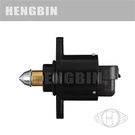


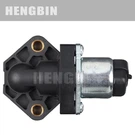


As a seasoned supplier of carbon canister solenoid valves, I've witnessed firsthand the critical role these components play in modern automotive emission control systems. Adjusting the opening and closing time of a carbon canister solenoid valve is a nuanced process that requires a deep understanding of the valve's function, the vehicle's emission requirements, and the overall engine management system. In this blog post, I'll share my insights on how to effectively adjust these crucial timings.
Understanding the Carbon Canister Solenoid Valve
Before delving into the adjustment process, it's essential to understand what a carbon canister solenoid valve does. The carbon canister solenoid valve is a key part of the evaporative emission control system (EVAP). Its primary function is to regulate the flow of fuel vapor from the carbon canister to the engine's intake manifold. When the engine is running, the valve opens at specific intervals to allow the stored fuel vapor to be drawn into the engine and burned, reducing harmful emissions and improving fuel efficiency.
Factors Affecting Opening and Closing Time
Several factors influence the optimal opening and closing time of a carbon canister solenoid valve:


- Engine Operating Conditions: The valve's timing needs to be adjusted according to the engine's operating conditions, such as idle, acceleration, and deceleration. For example, during idle, the valve may open less frequently to prevent an overly rich fuel mixture.
- Vehicle Emission Standards: Different regions have varying emission standards, which dictate the allowable levels of evaporative emissions. The valve's timing must be set to meet these standards.
- Fuel Type and Quality: The type and quality of fuel used can affect the vaporization rate and the amount of fuel vapor generated. This, in turn, may require adjustments to the valve's opening and closing times.
- Canister Capacity: The size and capacity of the carbon canister determine how much fuel vapor it can store. A larger canister may require different valve timing compared to a smaller one.
Tools and Equipment Needed
To adjust the opening and closing time of a carbon canister solenoid valve, you'll need the following tools and equipment:
- Diagnostic Scanner: A diagnostic scanner is essential for accessing the vehicle's engine control unit (ECU) and retrieving relevant data, such as the valve's current timing settings.
- Multimeter: A multimeter can be used to measure the electrical signals sent to the solenoid valve, ensuring proper operation.
- Wrenches and Screwdrivers: These basic hand tools are needed for removing and reinstalling the valve if necessary.
Step-by-Step Adjustment Process
Here's a step-by-step guide on how to adjust the opening and closing time of a carbon canister solenoid valve:
- Connect the Diagnostic Scanner: Start by connecting the diagnostic scanner to the vehicle's OBD-II port. This will allow you to access the ECU and view the current settings for the carbon canister solenoid valve.
- Retrieve Valve Timing Data: Use the diagnostic scanner to retrieve the current opening and closing times of the valve. This information will serve as a baseline for your adjustments.
- Analyze Engine Operating Conditions: Consider the engine's operating conditions, such as idle speed, load, and temperature. Based on these factors, determine the optimal timing for the valve to open and close.
- Make Adjustments in the ECU: Using the diagnostic scanner, make the necessary adjustments to the valve's timing settings in the ECU. It's important to make small, incremental changes and test the vehicle's performance after each adjustment.
- Test the Vehicle: After making the adjustments, take the vehicle for a test drive to evaluate its performance. Pay attention to factors such as engine smoothness, fuel efficiency, and emission levels. If necessary, make further adjustments until the desired results are achieved.
- Verify Settings: Once you're satisfied with the adjustments, use the diagnostic scanner to verify that the new timing settings have been successfully saved in the ECU.
Common Mistakes to Avoid
When adjusting the opening and closing time of a carbon canister solenoid valve, it's important to avoid the following common mistakes:
- Making Excessive Adjustments: Making large, sudden adjustments to the valve's timing can lead to engine performance issues, such as rough idle, poor acceleration, and increased emissions. Always make small, incremental changes and test the vehicle's performance after each adjustment.
- Ignoring Engine Operating Conditions: Failing to consider the engine's operating conditions when making adjustments can result in suboptimal valve timing. Make sure to analyze factors such as idle speed, load, and temperature to determine the best timing for the valve.
- Not Testing the Vehicle: Skipping the test drive after making adjustments can prevent you from identifying any performance issues or emission problems. Always test the vehicle to ensure that the adjustments have been successful.
Conclusion
Adjusting the opening and closing time of a carbon canister solenoid valve is a complex but essential process for maintaining optimal engine performance and reducing harmful emissions. By understanding the factors that affect valve timing, using the right tools and equipment, and following a systematic adjustment process, you can ensure that your carbon canister solenoid valve is operating at its best.
At our company, we offer a wide range of high-quality carbon canister solenoid valves, including the Carbon Canister Solenoid Valve 11601595 Suitable for Geely GEELY Vision X3, Carbon Canister Solenoid Valve '0280142424 Suitable for Various Car Models Such As Mazda, and Carbon Tank Solenoid Valve 28596988 Is Suitable for Various Models, Such As JAC. If you're in the market for a reliable carbon canister solenoid valve or need assistance with valve timing adjustment, please don't hesitate to contact us. We're here to help you find the best solutions for your automotive needs.
References
- Bosch Automotive Handbook.
- SAE International Technical Papers.
- Vehicle manufacturer's service manuals.