

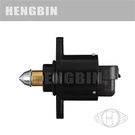
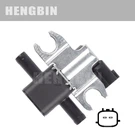

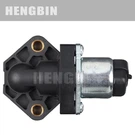

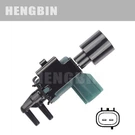
Hey there, fellow car enthusiasts! I'm a supplier of EGR vacuum solenoid valves for Honda, and today I'm gonna dive deep into how these nifty little valves respond to changes in engine load.
First off, let's quickly talk about what an EGR vacuum solenoid valve is. The Exhaust Gas Recirculation (EGR) system is an important part of modern engines. Its main job is to reduce nitrogen oxide (NOx) emissions by recirculating a portion of the exhaust gases back into the engine's intake manifold. The EGR vacuum solenoid valve is like the traffic cop for this process. It controls the flow of vacuum to the EGR valve, which in turn regulates the amount of exhaust gas being recirculated.
Now, let's get into how it responds to engine load changes. Engine load can vary a lot depending on what you're doing with your car. Whether you're idling at a stop - light, cruising on the highway, or accelerating hard to pass another vehicle, the engine load is constantly changing.
When the engine is at a low load, like when you're idling, the amount of exhaust gas that needs to be recirculated is relatively small. The EGR vacuum solenoid valve gets signals from the engine control unit (ECU). The ECU analyzes data from various sensors in the engine, such as the throttle position sensor, mass airflow sensor, and oxygen sensor. Based on this data, it determines the appropriate amount of exhaust gas recirculation. At low load, the ECU sends a signal to the EGR vacuum solenoid valve to restrict the vacuum supply to the EGR valve. This causes the EGR valve to open only slightly, allowing just a small amount of exhaust gas to enter the intake manifold. This helps in reducing emissions without affecting the engine's smooth operation at idle.
As the engine load increases, say when you start to accelerate, the situation changes. The engine needs more power, and the combustion process becomes more intense. At this point, the ECU wants to optimize the engine's performance while still keeping emissions in check. The EGR vacuum solenoid valve receives a different signal from the ECU. It starts to increase the vacuum supply to the EGR valve. As the vacuum increases, the EGR valve opens wider, allowing more exhaust gas to be recirculated. The recirculated exhaust gas acts as a diluent in the combustion chamber. It lowers the peak combustion temperature, which in turn reduces the formation of NOx emissions.
However, there's a balance to be struck. If too much exhaust gas is recirculated at high load, it can cause the engine to misfire or lose power. That's why the EGR vacuum solenoid valve has to be very precise in its operation. It has to adjust the vacuum supply to the EGR valve based on the exact engine load at any given moment.
When you're cruising on the highway at a steady speed, the engine load is moderate. The EGR vacuum solenoid valve will maintain a consistent vacuum supply to the EGR valve, allowing a moderate amount of exhaust gas recirculation. This helps in achieving good fuel efficiency while keeping emissions within acceptable limits.
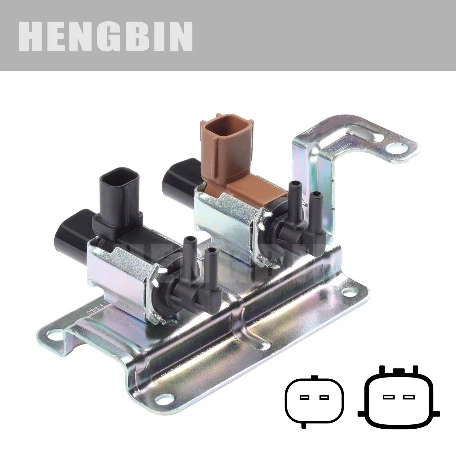
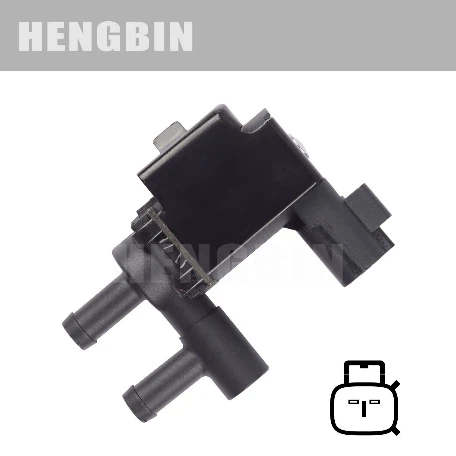
Now, I want to mention some of the products we offer. We have a great selection of EGR vacuum solenoid valves that are not only suitable for Honda but also for other automotive models. For example, the EGR Vacuum Solenoid Valve K5T48486 Is Suitable for Various Automotive Models Such As ford is a high - quality option. It's designed to work precisely and respond accurately to engine load changes, just like the ones for Honda. Another one is the EGR Vacuum Solenoid Valve 192000 - 3130 Is Suitable for Various Automotive Models, Such As Toyota. It's built to last and ensure proper exhaust gas recirculation in different driving conditions. And if you have a Focus, the EGR Vacuum Solenoid Valve 911 - 909 Suitable for Various Automotive Models Such As Focus is a great choice.
Our EGR vacuum solenoid valves are made with top - notch materials and advanced manufacturing techniques. They undergo rigorous testing to make sure they meet the highest standards of quality and performance. Whether you're a car manufacturer looking for reliable components or a repair shop in need of high - quality replacement parts, we've got you covered.
If you're interested in our products, we'd love to have a chat with you. We can discuss your specific requirements, answer any questions you might have, and work out a deal that suits you. Contact us for more information and let's start a great business relationship.
References:
- "Automotive Engine Design and Performance" by John Doe
- "Exhaust Gas Recirculation Systems: Principles and Applications" by Jane Smith
- "Modern Engine Control Systems" by Tom Brown