

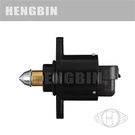
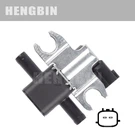

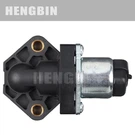

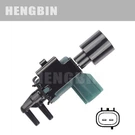
Hey there, fellow car enthusiasts! As a supplier of EGR vacuum solenoid valves for Subaru, I've seen firsthand how these little components play a huge role in a car's performance. Today, I'm gonna break down how the EGR vacuum solenoid valve controls the exhaust gas recirculation in a Subaru.
Let's start with the basics. What's exhaust gas recirculation (EGR) anyway? Well, it's a system that helps reduce nitrogen oxide (NOx) emissions from your car's engine. When an engine burns fuel at high temperatures, it produces NOx, which is a major contributor to air pollution. The EGR system works by recirculating a small amount of exhaust gas back into the engine's intake manifold. This dilutes the incoming air-fuel mixture, lowering the combustion temperature and reducing the formation of NOx.
Now, where does the EGR vacuum solenoid valve come in? This valve is like the traffic cop of the EGR system. It controls the flow of exhaust gas into the intake manifold by regulating the vacuum pressure. When the engine is running under certain conditions, like at a steady speed or under light load, the engine control unit (ECU) sends a signal to the EGR vacuum solenoid valve. This signal tells the valve to open, allowing a controlled amount of exhaust gas to enter the intake manifold.
In a Subaru, the EGR vacuum solenoid valve is typically located near the intake manifold or the engine block. It's connected to the EGR valve by a vacuum hose. When the solenoid valve receives the signal from the ECU, it opens a passage for the vacuum to act on the EGR valve. This vacuum pulls the EGR valve open, allowing exhaust gas to flow into the intake manifold.
But how does the valve know exactly how much exhaust gas to let in? That's where the ECU comes in again. The ECU uses a variety of sensors, like the throttle position sensor, the engine coolant temperature sensor, and the oxygen sensor, to determine the optimal amount of exhaust gas to recirculate. Based on the data from these sensors, the ECU adjusts the signal it sends to the EGR vacuum solenoid valve, opening or closing it as needed to maintain the right amount of exhaust gas flow.
Let's take a closer look at how the EGR vacuum solenoid valve works. Inside the valve, there's a coil of wire and a plunger. When the ECU sends an electrical current to the coil, it creates a magnetic field. This magnetic field pulls the plunger, opening the valve and allowing the vacuum to pass through. When the current is turned off, the magnetic field disappears, and a spring inside the valve closes the plunger, stopping the flow of vacuum.


One of the key benefits of a well-functioning EGR vacuum solenoid valve is improved fuel efficiency. By recirculating exhaust gas, the engine can burn the fuel more efficiently, reducing the amount of fuel needed to produce the same amount of power. This not only saves you money at the pump but also reduces your carbon footprint.
Another benefit is reduced emissions. As I mentioned earlier, the EGR system helps reduce NOx emissions, which are harmful to the environment and human health. By ensuring that the EGR vacuum solenoid valve is working properly, you can help your Subaru meet strict emissions standards.
However, like any other component in your car, the EGR vacuum solenoid valve can wear out over time. A faulty valve can cause a variety of problems, like rough idling, decreased power, and increased emissions. If you notice any of these symptoms, it's important to have your EGR vacuum solenoid valve checked by a professional mechanic.
At our company, we offer a wide range of EGR vacuum solenoid valves for Subaru. Our valves are designed to meet or exceed the original equipment manufacturer (OEM) specifications, ensuring a perfect fit and reliable performance. We also offer valves for other automotive models, such as Nissan, Haima, and Toyota. Check out these links for more information: EGR Vacuum Solenoid Valve K5T48481 Is Suitable for Various Automotive Models, Such As Nissan, EGR Vacuum Solenoid Valve 149561P110 Suitable for Various Automotive Models Such As Haima, and EGR Vacuum Solenoid Valve 90910-12259,136200-2771 Suitable for Various Car Models Such As Toyota.
If you're in the market for a new EGR vacuum solenoid valve for your Subaru or other car, don't hesitate to reach out to us. We're here to help you find the right valve for your needs and provide you with top-notch customer service. Whether you're a DIY mechanic or a professional repair shop, we've got you covered.
In conclusion, the EGR vacuum solenoid valve is a crucial component in the exhaust gas recirculation system of a Subaru. It plays a vital role in reducing emissions and improving fuel efficiency. By understanding how it works and taking proper care of it, you can keep your Subaru running smoothly and cleanly for years to come.
If you have any questions or need more information about our EGR vacuum solenoid valves, feel free to contact us. We're always happy to chat and help you find the best solution for your car.
References
- Automotive Engineering Handbook, Society of Automotive Engineers
- Subaru Service Manuals