

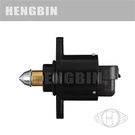
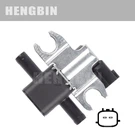


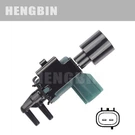
Hey there! As a supplier of EGR vacuum solenoid valves, I often get asked about how to measure the resistance of these little but crucial components. So, today I'm gonna share with you the ins and outs of measuring the resistance of an EGR vacuum solenoid valve.
First off, let's talk a bit about what an EGR vacuum solenoid valve is and why it's important. The Exhaust Gas Recirculation (EGR) system in a vehicle helps reduce nitrogen oxide emissions by recirculating a portion of the exhaust gas back into the engine cylinders. The EGR vacuum solenoid valve plays a key role in this system by controlling the vacuum that operates the EGR valve. If the solenoid valve malfunctions, it can lead to increased emissions, poor engine performance, and even trigger the check engine light.
Now, onto measuring the resistance. To do this, you'll need a few tools: a digital multimeter, which is a handy device that can measure voltage, current, and resistance; and a set of jumper wires, which will help you connect the multimeter to the solenoid valve.


Step 1: Safety First
Before you start working on your vehicle, make sure the engine is turned off and the battery is disconnected. This will prevent any electrical shocks or short circuits. Also, wear safety glasses and gloves to protect yourself from any potential hazards.
Step 2: Locate the EGR Vacuum Solenoid Valve
The EGR vacuum solenoid valve is usually located near the engine, often on or near the intake manifold. It's a small, rectangular or cylindrical component with electrical connectors and vacuum hoses attached to it. You can refer to your vehicle's repair manual or look online for the exact location of the solenoid valve in your specific make and model.
Step 3: Disconnect the Electrical Connector
Once you've located the solenoid valve, carefully disconnect the electrical connector from it. You may need to use a small flathead screwdriver to release the locking tab on the connector.
Step 4: Set Up the Multimeter
Turn on the multimeter and set it to the resistance (ohms) mode. You can usually find the ohms symbol (Ω) on the dial or buttons of the multimeter. Make sure the multimeter is set to an appropriate range for measuring the resistance of the solenoid valve. Most EGR vacuum solenoid valves have a resistance between 20 and 60 ohms, so you can start by setting the multimeter to the 200-ohm range.
Step 5: Connect the Multimeter to the Solenoid Valve
Take the jumper wires and connect one end of each wire to the probes of the multimeter. Then, connect the other ends of the jumper wires to the terminals of the solenoid valve. Make sure the connections are secure and there is good contact between the wires and the terminals.
Step 6: Read the Resistance Value
Once the multimeter is connected to the solenoid valve, the display will show the resistance value in ohms. Compare this value to the specifications for your specific solenoid valve. You can usually find the specifications in your vehicle's repair manual or on the manufacturer's website. If the measured resistance is within the specified range, the solenoid valve is likely functioning properly. If the resistance is significantly higher or lower than the specified range, the solenoid valve may be faulty and need to be replaced.
Step 7: Reconnect the Electrical Connector
After you've finished measuring the resistance, disconnect the jumper wires from the solenoid valve and reconnect the electrical connector. Make sure the connector is securely attached and the locking tab is engaged.
Step 8: Reconnect the Battery
Finally, reconnect the battery and start the engine. Check to see if the check engine light is still on or if there are any other signs of a problem. If everything seems to be working okay, you're good to go!
It's important to note that measuring the resistance is just one way to test the EGR vacuum solenoid valve. There are other tests you can perform, such as checking for proper voltage and vacuum operation, to ensure the valve is functioning correctly. If you're not comfortable performing these tests yourself, it's always a good idea to take your vehicle to a professional mechanic.
At our company, we offer a wide range of high-quality EGR vacuum solenoid valves that are suitable for various automotive models. For example, we have the EGR Vacuum Solenoid Valve 2502487905 Suitable for Various Automotive Models Such As Mitsubishi, the EGR Vacuum Solenoid Valve K5T48592 Is Suitable for Various Automotive Models, Such As Nissan, and the EGR Vacuum Solenoid Valves25860-46010Suitable for Various Car Models Such As Toyota. Our valves are designed to meet or exceed OEM specifications, so you can be confident in their performance and reliability.
If you're in the market for EGR vacuum solenoid valves or have any questions about measuring the resistance or testing these components, don't hesitate to reach out to us. We're here to help you find the right parts for your vehicle and ensure your engine is running smoothly and efficiently.
References
- "Automotive Electrical Systems" by William H. Crouse and Donald L. Anglin
- "Haynes Repair Manual" for your specific vehicle make and model