

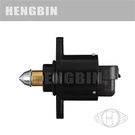
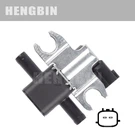

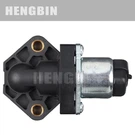

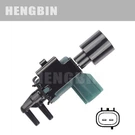
Hey there, fellow car enthusiasts! As a supplier of carbon tank solenoid valves for Ford, I've gotten a ton of questions over the years. One that keeps popping up is, "Can a carbon tank solenoid valve issue cause the Ford to have a vibration problem?" Today, I'm gonna dig deep into this topic and share what I've learned.
First off, let's talk about what a carbon tank solenoid valve does. It's a crucial part of your car's evaporative emission control system. Its main job is to control the flow of fuel vapors from the carbon canister to the engine's intake manifold. When your car is running, these vapors are burned in the engine, which helps reduce emissions and improve fuel efficiency.
Now, let's get to the big question: can a problem with this valve lead to vibrations in your Ford? The answer is yes, it can. Here's how.
How a Faulty Carbon Tank Solenoid Valve Can Cause Vibrations
1. Incorrect Air - Fuel Mixture
The carbon tank solenoid valve plays a key role in maintaining the right air - fuel mixture in the engine. If the valve is stuck open, it can allow too much fuel vapor to enter the intake manifold. This results in a rich air - fuel mixture, meaning there's too much fuel and not enough air. When the engine tries to burn this rich mixture, it can misfire. Misfires are when the fuel in one or more cylinders doesn't burn properly. And misfires often lead to vibrations that you can feel in the steering wheel, the seat, or the whole car.
On the other hand, if the valve is stuck closed, not enough fuel vapor gets into the engine. This creates a lean air - fuel mixture (too much air, not enough fuel). A lean mixture can also cause misfires and vibrations.
2. Vacuum Leaks
The carbon tank solenoid valve is connected to the engine's vacuum system. If the valve is damaged or not sealing properly, it can create a vacuum leak. Vacuum leaks disrupt the normal operation of the engine by allowing unmetered air to enter the intake manifold. This throws off the air - fuel ratio and can cause the engine to run rough, leading to vibrations.
3. Engine Load Imbalance
A malfunctioning carbon tank solenoid valve can also cause an imbalance in the engine's load. When the valve doesn't work as it should, the engine may have to work harder to compensate for the incorrect air - fuel mixture or the vacuum leak. This uneven load on the engine can result in vibrations as the engine struggles to maintain a smooth operation.
Signs of a Faulty Carbon Tank Solenoid Valve
So, how do you know if your carbon tank solenoid valve is the culprit behind the vibrations? Here are some signs to look out for:
- Check Engine Light: A faulty valve can trigger the check engine light on your dashboard. The car's onboard diagnostic system detects the abnormal operation of the valve and sets a trouble code.
- Poor Fuel Economy: Since the valve affects the air - fuel mixture, a malfunction can lead to decreased fuel efficiency. You may notice that you're filling up your tank more often than usual.
- Rough Idle: The engine may idle roughly or even stall when the valve is not working correctly. You might feel the car shaking when it's in park or at a stoplight.
Solutions and Our Products
If you suspect that your carbon tank solenoid valve is causing the vibration problem in your Ford, it's important to get it checked out. You can take your car to a mechanic, who will use diagnostic tools to confirm the issue. Once the problem is identified, you'll need to replace the faulty valve.
As a supplier of carbon tank solenoid valves for Ford, we offer high - quality replacement parts. Our valves are designed to meet or exceed the original equipment manufacturer (OEM) specifications, ensuring a perfect fit and reliable performance.
We also have a wide range of carbon tank solenoid valves suitable for other car models. For example, the Canister Purge Valve13907636154 Is Suitable for All Models Such As BMW is a great option if you own a BMW. And if you have a Chevrolet, our Carbon Canister Solenoid Valve 24106416Suitable for Various Car Models Such As Chevrolet can be a perfect replacement. For Toyota owners, the Carbon Tank Solenoid Valve 0280142489 Suitable for Various Models Such As Toyota is available.
Why Choose Our Products
- Quality Assurance: We source our materials from trusted suppliers and use advanced manufacturing processes to ensure the durability and performance of our valves.
- Competitive Pricing: We understand the importance of cost - effectiveness. That's why we offer our products at competitive prices without compromising on quality.
- Expert Support: Our team of experts is always ready to help you with any questions you may have about our products or installation.
Contact Us for Procurement
If you're interested in purchasing our carbon tank solenoid valves, whether it's for your Ford or other car models, don't hesitate to reach out. We're here to provide you with the best products and services. Contact us to start the procurement process and get your car running smoothly again.


References
- "Automotive Engine Performance", by James D. Halderman.
- "How Stuff Works - Cars", various articles on car emissions and engine components.